
|
This guide is part of our Sleep & Relaxation series, where we explore cannabinoids, natural sleep aids, and nighttime wellness products designed to support deeper rest and recovery.
👉 Explore more Sleep guides: CBD vs CBN for Sleep, CBD Gummies for Sleep, and nighttime cannabinoid wellness education.
CBN vs Melatonin
Sleep issues affect millions of people every year, leading many consumers to search for natural alternatives to prescription sleep medications. Two of the most discussed options today are CBN and melatonin — but they work very differently inside the body.
While melatonin is a hormone naturally produced by the brain to regulate sleep cycles, CBN (cannabinol) is a cannabinoid gaining attention for its calming and relaxation-supporting effects.
In this guide, we’ll break down:
- how CBN and melatonin work,
- their key differences,
- possible benefits and drawbacks,
- side effects,
- onset times,
- and which option may be better depending on your sleep goals.
What Is Melatonin?
Melatonin is a hormone naturally produced by the pineal gland in the brain. Your body releases melatonin primarily in response to darkness, helping regulate your circadian rhythm and sleep-wake cycle.
Melatonin supplements are commonly used for:
- jet lag,
- shift work,
- trouble falling asleep,
- and temporary sleep schedule disruptions.
Because melatonin directly impacts the body’s sleep timing signals, many people use it to help initiate sleep more quickly.
However, melatonin does not necessarily improve sleep quality for everyone, and some users report issues like:
- grogginess,
- vivid dreams,
- headaches,
- or next-day drowsiness.
What Is CBN?
CBN (cannabinol) is a naturally occurring cannabinoid found in hemp and cannabis plants. Unlike THC, CBN is generally described as non-intoxicating when derived from compliant hemp products.
CBN is commonly associated with:
- nighttime relaxation,
- calming effects,
- stress reduction,
- and sleep-support formulations.
Many modern sleep products combine:
- CBN,
- CBD,
- and sometimes Delta-8 THC
to create broader nighttime support blends.
Unlike melatonin, CBN does not function as a hormone. Instead, it interacts with the body’s endocannabinoid system, which plays a role in balance, mood, stress response, and recovery.
Research on CBN is still emerging, but growing consumer interest has made it one of the fastest-growing cannabinoid categories in the sleep wellness market.
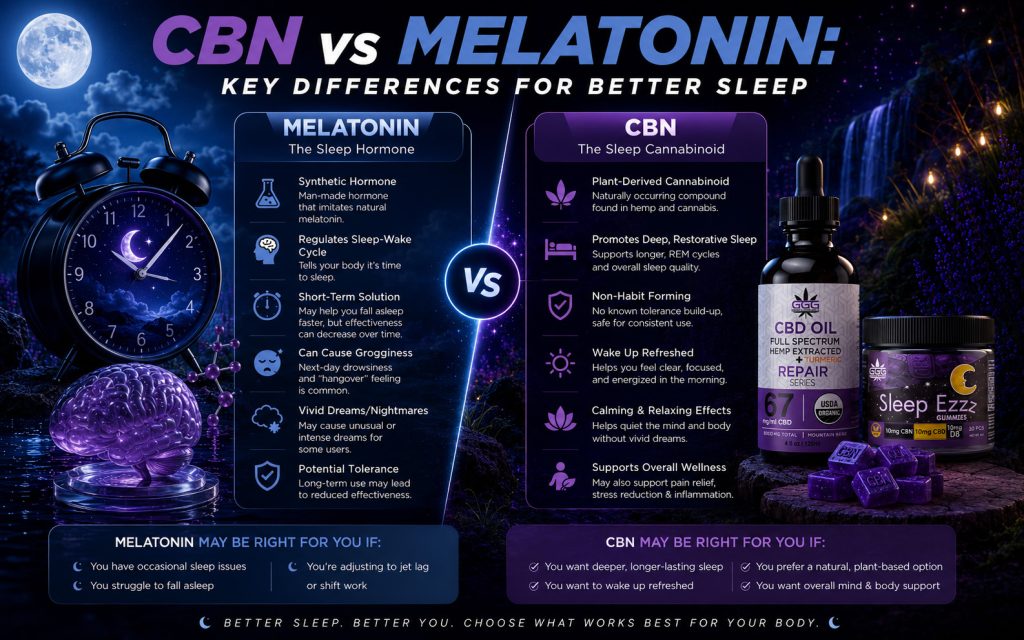
CBN vs Melatonin: Key Differences
1. They Work Through Different Systems
Melatonin works directly with the body’s circadian rhythm and biological sleep timing.
CBN works through the endocannabinoid system, which may help support relaxation and calmness before bed.
This is one of the biggest distinctions between the two compounds.
2. Melatonin May Help Faster Sleep Onset
Melatonin is often used specifically for:
- falling asleep faster,
- resetting sleep schedules,
- or correcting temporary sleep disruptions.
Many users notice effects within 30–60 minutes.
CBN products may also begin working within a similar timeframe, but users often describe the experience differently — focusing more on relaxation and winding down rather than “forcing” sleepiness.
3. CBN Products Often Include Other Cannabinoids
One major trend in the cannabinoid industry is the use of multi-cannabinoid sleep formulas.
For example, many nighttime gummies combine:
- CBD,
- CBN,
- and Delta-8 THC
To create more comprehensive nighttime support.
This differs from most melatonin products, which often rely primarily on melatonin alone.
For more on nighttime cannabinoid combinations, see 👉 CBD vs CBN for Sleep: What’s the Difference?
Which Is Better for Sleep Quality?
This depends heavily on the individual.
Some users prefer melatonin for:
- occasional sleep schedule problems,
- travel,
- or short-term sleep timing support.
Others prefer CBN because they report:
- deeper relaxation,
- less next-day grogginess,
- and a more natural-feeling nighttime experience.
Consumers who struggle more with:
- stress,
- racing thoughts,
- or difficulty winding down
Often lean toward cannabinoid-based sleep products instead of melatonin-only supplements.
Potential Side Effects
Melatonin Side Effects
Possible side effects may include:
- headaches,
- vivid dreams,
- grogginess,
- dizziness,
- or daytime sleepiness.
Some people also report feeling “hungover” the next morning after higher melatonin doses.
CBN Side Effects
Potential side effects of CBN products may include:
- drowsiness,
- dry mouth,
- appetite changes,
- or relaxation-related fatigue.
Products that also contain THC cannabinoids may produce stronger effects depending on dosage and tolerance.
As with any wellness supplement, consumers should start with lower servings and gradually assess tolerance.
Can You Take CBN and Melatonin Together?
Some sleep products combine cannabinoids with melatonin for enhanced nighttime formulations.
However, combining multiple sleep-support ingredients may increase sedation for some users.
Consumers should carefully review labels, serving sizes, and individual tolerance before combining products.
Who May Prefer Melatonin?
Melatonin may be preferred by people looking for:
- short-term sleep timing support,
- jet lag recovery,
- or circadian rhythm adjustment.
It is commonly used for temporary sleep schedule disruptions.
Who May Prefer CBN?

CBN may appeal more to consumers looking for:
- relaxation support,
- stress reduction before bed,
- nighttime calmness,
- or cannabinoid-based sleep wellness products.
Many users also prefer CBN products because they combine additional cannabinoids designed to support overall nighttime relaxation.
For more on cannabinoid product formats, see 👉 CBD Oil vs Gummies: Which Is Better for You?
Final Thoughts: CBN vs Melatonin
Both CBN and melatonin may help support better sleep, but they work through very different mechanisms.
Melatonin focuses primarily on regulating the body’s sleep-wake timing, while CBN products are typically used to promote relaxation and nighttime calmness.
For some people, melatonin may work best for occasional sleep schedule disruptions. Others may prefer the broader relaxation-focused experience associated with cannabinoid sleep products.
As research into cannabinoids continues to grow, CBN is rapidly becoming one of the most discussed ingredients in modern sleep wellness formulations.
If you’re exploring cannabinoid-based nighttime products, be sure to choose hemp-derived formulas from trusted brands that provide transparent testing and clear serving information.