
|
This guide is part of our CBG Education series, where we explore cannabigerol (CBG), focus-supporting cannabinoids, product quality, dosing strategies, and the science behind one of hemp’s most exciting compounds.
👉 Explore more CBG guides: CBG vs CBD: Which Is Better for Daytime Use?, What Does CBG Feel Like?, CBG Dosage Guide, and CBG for Anxiety: Benefits, Research & What to Expect.
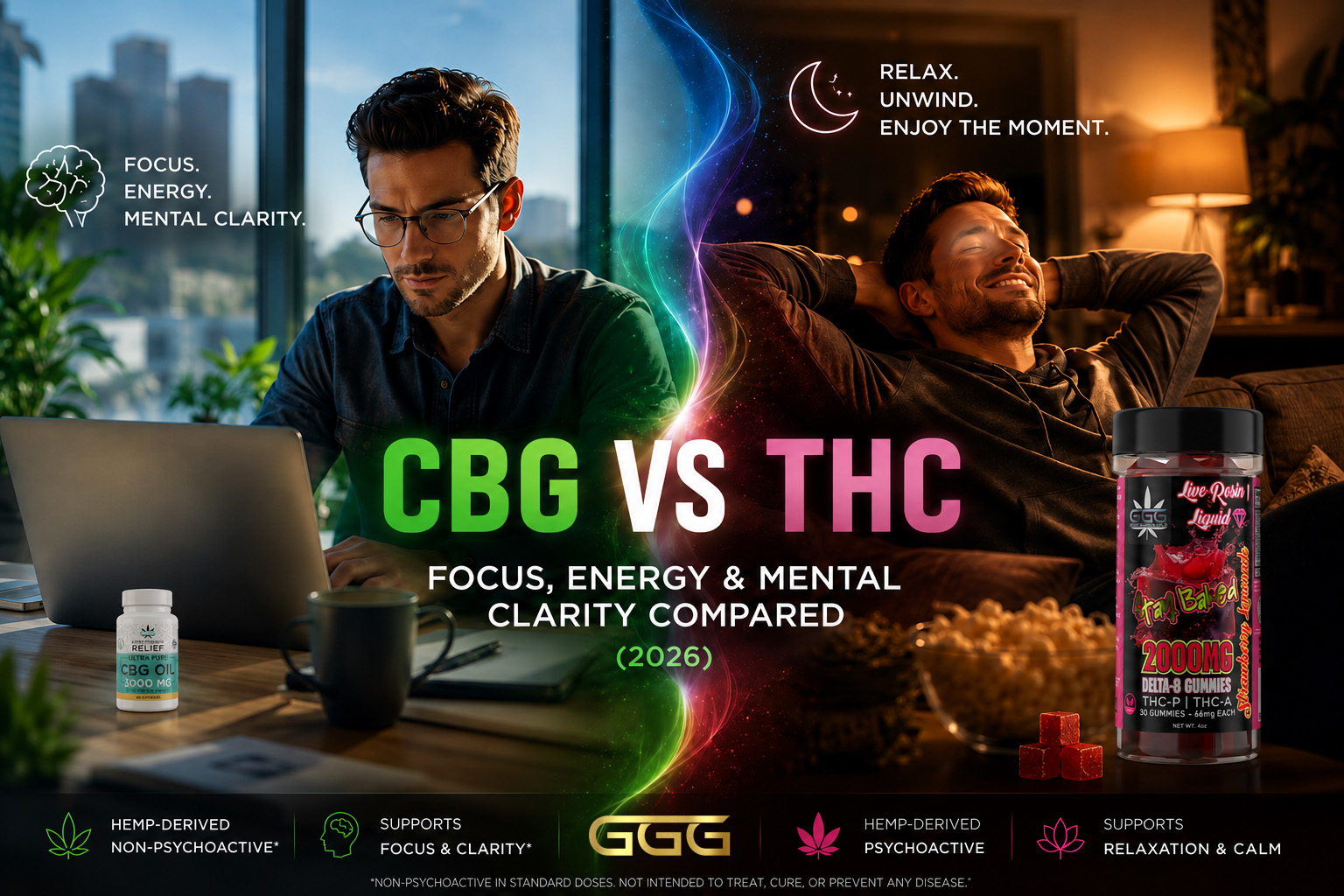
CBG vs THC: Focus, Energy & Mental Clarity Compared (2026)
As cannabinoid education continues to evolve, more consumers are discovering that not all cannabinoids produce the same experience.
While THC is often associated with euphoria and intoxication, CBG is increasingly attracting attention for an entirely different reason:
Many users report that it supports a sense of focus, clarity, and daytime functionality.
This has led to a growing number of consumers asking:
How does CBG compare to THC?
The answer starts with understanding how these cannabinoids interact with the body and why they often produce very different experiences.
What Is CBG?
CBG (cannabigerol) is often called the “mother cannabinoid.”
That’s because many major cannabinoids begin as CBGA before being converted into:
- CBD
- THC
- CBC
- and other cannabinoids
While hemp plants naturally contain lower concentrations of CBG than CBD, consumer interest in CBG has grown rapidly in recent years.
Unlike THC, CBG is non-intoxicating.
That means it does not produce the traditional “high” associated with cannabis.
If you’re new to CBG, our 🍃 What Does CBG Feel Like? guide provides a deeper look at the experiences many users report.
What Is THC?
THC (tetrahydrocannabinol) is the cannabinoid most commonly associated with cannabis intoxication.
THC interacts with cannabinoid receptors differently than CBG and is responsible for effects often described as:
- Euphoria
- Relaxation
- Mood elevation
- Altered perception
- Enhanced sensory awareness
Depending on serving size and individual tolerance, THC may also affect concentration, reaction time, and short-term memory.
The Biggest Difference: Intoxication
For many consumers, the biggest distinction is simple:
THC Can Produce A High
THC may create:
- Euphoria
- Relaxation
- Mood changes
- Altered perception
This is why many consumers use THC recreationally or for evening relaxation.
CBG Does Not Produce A High
CBG is non-intoxicating.
Users generally remain:
- Clear-headed
- Functional
- Productive
- Alert
This difference is one reason many consumers prefer CBG during daytime hours.
CBG & Focus

One of the most common reasons people explore CBG is focus.
While research is still developing, many users describe CBG as helping them feel:
- More engaged
- More productive
- More mentally organized
- Better able to concentrate
This has led some consumers to view CBG as a cannabinoid better suited for daytime wellness routines.
Our 🍃 CBG vs CBD: Which Is Better for Daytime Use? guide explores this topic in greater detail.
THC & Focus
THC experiences vary considerably.
Some consumers report enhanced creativity and deeper thinking.
Others find higher THC servings may make concentration more difficult.
Factors that influence this include:
- Serving size
- Individual tolerance
- Product formulation
- Environment
This variability is one reason THC is often viewed differently than cannabinoids like CBG.
CBG & Energy
Many CBG users report feeling:
- Motivated
- Alert
- Mentally refreshed
- Ready to tackle daily tasks
It’s important to note that CBG is not a stimulant.
It isn’t caffeine.
It doesn’t function like an energy drink.
However, many consumers describe the experience as supportive of productivity and daytime performance.
THC & Relaxation
While CBG is frequently associated with daytime use, THC is often associated with:
- Evening use
- Relaxation
- Winding down
- Leisure activities
This doesn’t mean one cannabinoid is better than the other.
They simply tend to be used for different goals.
Which Cannabinoid Is Better?
The answer depends entirely on what you’re looking for.
CBG May Be Better For:
- Focus
- Productivity
- Daytime use
- Clear-headed wellness support
- Individuals avoiding intoxication
THC May Be Better For:
- Relaxation
- Recreational experiences
- Evening routines
- Mood elevation
- Consumers seeking intoxicating effects
The “best” cannabinoid is the one that aligns with your goals.
Why Product Quality Matters
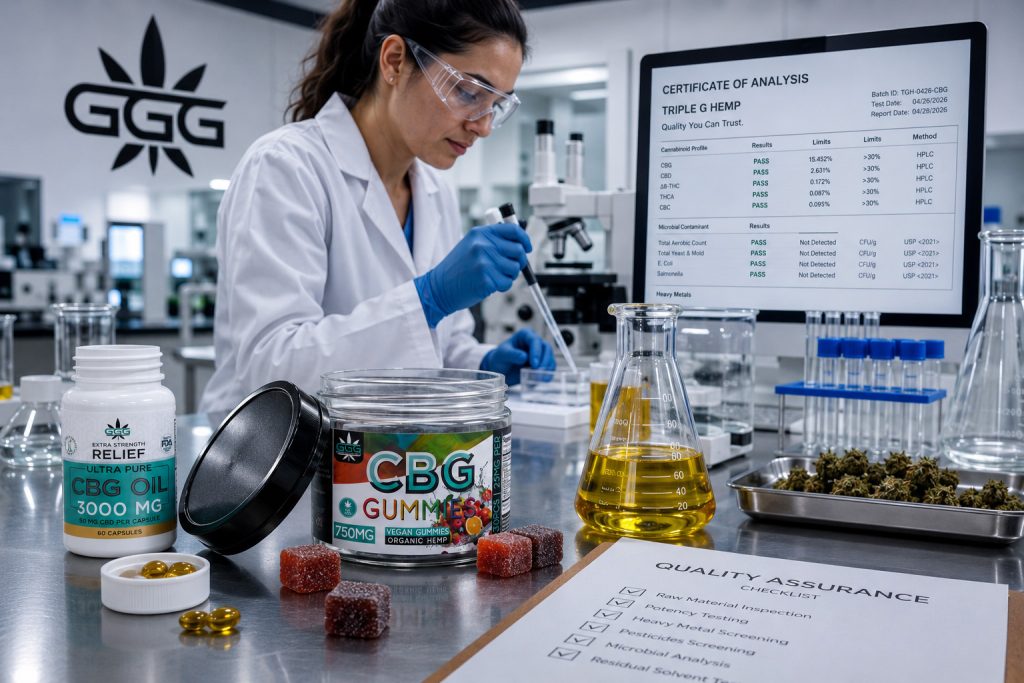
As interest in minor cannabinoids continues to grow, product quality becomes increasingly important.
Not all CBG products are formulated equally.
Consumers should look for:
- Third-party testing
- Transparent labeling
- Verified cannabinoid content
- Reputable manufacturing standards
At Triple G Hemp™, our focus has always been on quality, consistency, and transparency.
Whether it’s our One2One™ CBD/CBG Oil or our premium CBG Capsules, we believe consumers deserve to know exactly what they’re taking.
Final Thoughts
CBG and THC are two very different cannabinoids.
While THC is commonly associated with intoxication, relaxation, and euphoria, CBG has increasingly become known for its clear-headed, daytime-friendly reputation.
For consumers seeking:
- Focus
- Productivity
- Mental clarity
- Non-intoxicating wellness support
CBG may be worth exploring.
For consumers seeking:
- Relaxation
- Recreational experiences
- Traditional THC effects
THC may be the better fit.
Understanding these differences can help consumers choose products that align with their goals and create a better overall cannabinoid experience.